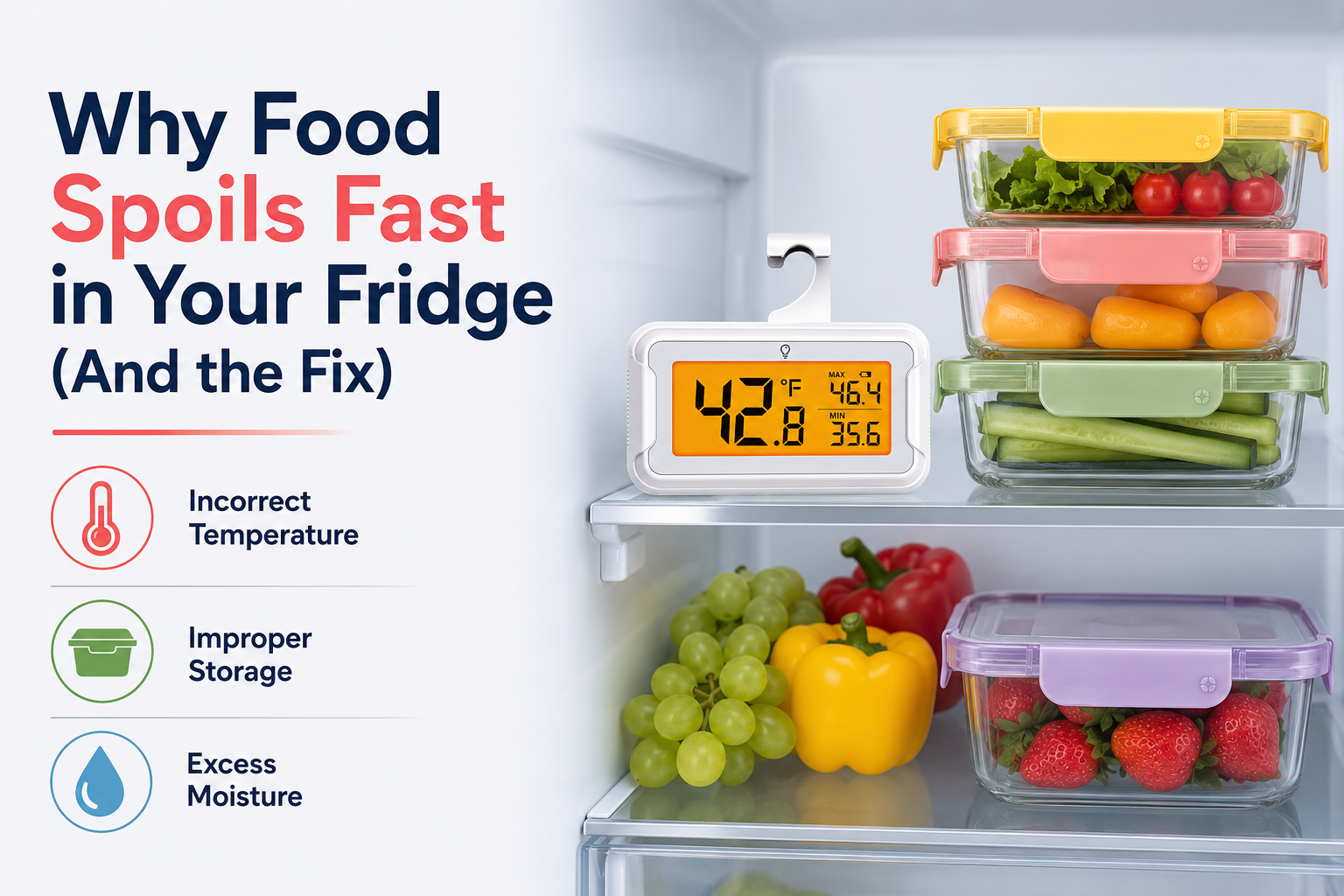
Why Food Spoils Fast in Your Fridge (And the Fix)
Why does food go bad fast in fridge storage, even when everything looks properly chilled? If you’ve ever tossed out spinach three days after buying it, or watched leftovers turn sketchy by day four, you’re not alone — and it’s probably not your fridge’s fault, or yours either. In most cases, it comes down to one of two things: your fridge isn’t actually as cold as you think it is, or your food isn’t stored the way it needs to be. Both are easy to fix once you know what to look for.
| Product | Best For | Rating |
|---|---|---|
| Digital Fridge/Freezer Thermometer | Checking your fridge's real temperature | ⭐⭐⭐⭐⭐ |
| Airtight Glass Food Storage Containers | Leftovers and meal prep | ⭐⭐⭐⭐⭐ |
| Produce Saver Containers (vented lids) | Fruits and vegetables | ⭐⭐⭐⭐ |
| Reusable Silicone Food Storage Bags | Meat, dairy, and snacks | ⭐⭐⭐⭐ |
| Fridge Storage Bins / Organizer Set | Overall fridge organization | ⭐⭐⭐⭐ |
Product Reviews
Digital Fridge/Freezer Thermometer
Overview: This is the one item on this list most people skip — and it’s usually the reason food spoils early. Fridges can drift several degrees off without any warning light or alert. A simple digital thermometer tells you exactly what’s going on inside, in both the fridge and freezer compartments.
Pros:
- Shows real-time temperature at a glance
- Helps you catch a failing fridge before food is ruined
- Inexpensive and takes seconds to set up
Cons:
- Requires you to check it manually (non-app models)
- Battery needs occasional replacement
Best For: Anyone who’s had food spoil unexpectedly and wants to rule out a temperature problem first.
Verdict: This is the cheapest, fastest way to diagnose whether your fridge is actually the issue. Worth having even if you never had a spoilage problem before.
Airtight Glass Food Storage Containers
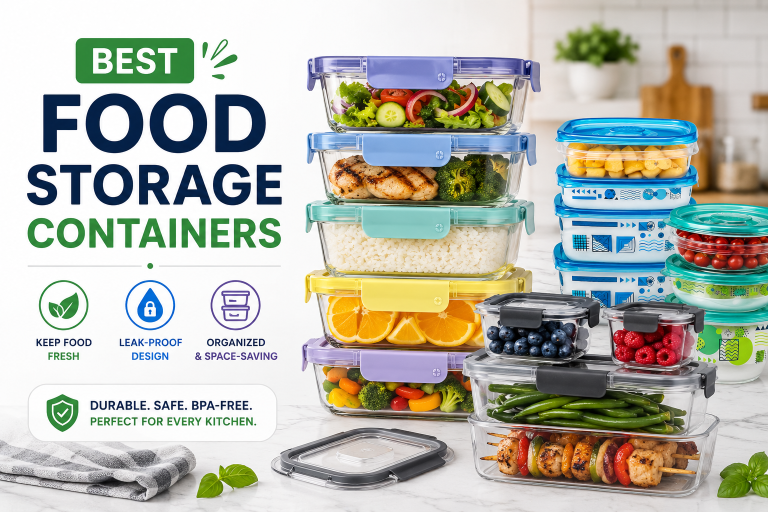
Overview: Loosely covered leftovers lose moisture, absorb fridge odors, and are exposed to more bacteria in the air. A proper airtight seal slows all three down significantly, which is why glass containers tend to outperform foil or plastic wrap.
Pros:
- Keeps leftovers fresher for longer
- Doesn’t absorb odors or stains like plastic can
- Oven, microwave, and dishwasher safe (glass)
Cons:
- Heavier than plastic alternatives
- Takes up more cabinet space
Best For: Meal preppers, families with regular leftovers, and anyone tired of soggy or dried-out containers.
Verdict: This is one of the simplest upgrades you can make to extend how long cooked food actually lasts in the fridge.
Produce Saver Containers (Vented Lids)
Overview: Fruits and vegetables spoil fast for a reason most people don’t think about: humidity. Some produce needs more airflow, some needs less, and regular containers don’t account for that. Vented produce savers are built to manage moisture so greens don’t wilt and berries don’t turn mushy within days.
Pros:
- Extends freshness of leafy greens, berries, and herbs
- Reduces excess moisture that leads to mold
- Stackable, so they don’t eat up fridge space
Cons:
- Different produce types may need different vent settings
- Not ideal for very large batches of produce
Best For: Anyone who buys fresh produce regularly and is tired of throwing half of it away.
Verdict: If wilted greens or moldy berries are a recurring problem in your house, this is likely to make the biggest visible difference.
Reusable Silicone Food Storage Bags
Overview: Standard zip-top bags don’t always seal as tightly as they should, especially after a few uses. Silicone storage bags create a tighter seal and hold up better over time, which matters most for items like meat, cheese, and cut produce that are sensitive to air exposure.
Pros:
- Stronger seal than most disposable bags
- Reusable and easy to clean
- Freezer-safe for longer-term storage
Cons:
- Higher upfront cost than disposable bags
- Needs to be washed and fully dried between uses
Best For: Households wanting to cut down on spoilage and reduce disposable plastic use at the same time.
Verdict: A practical swap for anyone who regularly freezes meat or stores cut produce and dairy.
Fridge Storage Bins / Organizer Set
Overview: It’s not just about how food is stored — it’s about where. Food pushed to the back of a packed fridge often gets forgotten, and overcrowded shelves block the airflow your fridge needs to keep an even temperature throughout. A bin system fixes both problems at once.
Pros:
- Improves airflow, which helps maintain consistent temperature
- Makes it easier to see and use older items first (FIFO)
- Keeps similar items grouped together
Cons:
- Requires an initial setup/organizing session
- Bin sizes may not fit every fridge layout perfectly
Best For: Anyone whose fridge tends to get cluttered, or who frequently finds forgotten food in the back.
Verdict: A simple organizational shift that pays off almost immediately in less wasted food.
| Product | Main Purpose | Best For | Reusable |
|---|---|---|---|
| Digital Fridge/Freezer Thermometer | Diagnoses temperature issues | Everyone, first step | Yes |
| Airtight Glass Containers | Preserves cooked food/leftovers | Meal preppers | Yes |
| Produce Saver Containers | Manages humidity for produce | Fresh fruit/veg buyers | Yes |
| Silicone Storage Bags | Seals meat, dairy, cut produce | Freezer storage | Yes |
| Fridge Storage Bins | Improves airflow and organization | Cluttered fridges | Yes |
Buying Guide:
What Actually Causes Food to Spoil Fast
Before blaming your groceries, it helps to understand what’s really going on inside your fridge — and why does food go bad fast in fridge conditions that seem perfectly normal.
1. Your fridge might not be as cold as you think. The ideal range is 37–40°F (3–4°C), but many fridges run several degrees warmer without any obvious sign. A digital thermometer is the easiest way to confirm this in under a minute.
2. Airflow matters more than most people realize. A packed fridge blocks the internal fan from circulating cold air evenly, which means some shelves stay colder than others. Using a bin-based organizer system keeps items grouped without fully blocking airflow.
3. Loose wrapping speeds up spoilage. Plastic wrap and half-closed containers let air in, which dries food out and speeds up bacterial growth. Switching to airtight glass containers solves this for leftovers and prepped meals.
4. Produce has different needs than everything else. Leafy greens, berries, and herbs are especially sensitive to humidity. Vented produce containers are designed specifically to manage this, which is why produce often lasts noticeably longer once switched over.
5. Where you place food in the fridge matters. The door is the warmest part of the fridge — not ideal for dairy or eggs, despite the built-in shelves. The back of the top shelf tends to be coldest and most consistent, making it a good spot for items that spoil easily.
6. “First in, first out” prevents forgotten food. It’s easy to lose track of what’s already in there. Rotating older items to the front, especially with a reusable silicone bag system for labeling and grouping, makes it far less likely something gets pushed to the back and forgotten.
Frequently Asked Questions
What temperature should my fridge actually be set to? Between 37–40°F (3–4°C) is the safe range recommended by the USDA. Anything warmer speeds up bacterial growth significantly, even if it doesn’t feel noticeably warm to the touch.
Why does my food still spoil fast even though the fridge feels cold? “Feels cold” and “is actually cold enough” aren’t the same thing. Many fridges run warmer than their dial suggests, especially if the door is opened often or the fridge is overpacked. A thermometer is the only reliable way to know for sure.
Does overpacking my fridge really make a difference? Yes. Cold air needs room to circulate. When shelves are too full, some areas don’t get properly cooled, which can cause spoilage even if the overall fridge temperature reads fine.
Is glass or plastic better for food storage? Glass generally holds up better over time, doesn’t stain or absorb odors, and creates a more reliable seal. Plastic is lighter and cheaper but tends to degrade and seal less effectively with repeated use.
How often should I clean out my fridge? A quick check once a week helps catch spoiling items early and keeps airflow clear. A deeper clean-out once a month is a good habit for most households.
Can better storage really extend how long food lasts? Yes, often significantly. Combining a confirmed correct fridge temperature with airtight, humidity-appropriate storage is one of the most effective ways to reduce food waste at home.
Final Verdict
If food keeps spoiling faster than expected, start with the basics: confirm your fridge is actually cold enough with a Digital Fridge/Freezer Thermometer, then upgrade how you store things. Airtight Glass Food Storage Containers are the best all-around choice for leftovers, while Produce Saver Containers make a noticeable difference for fruits and vegetables specifically. If you go through a lot of meat or dairy, Reusable Silicone Storage Bags are worth adding, and a Fridge Storage Bins Set ties it all together by keeping everything organized and easy to see. None of these require a big lifestyle change — just a few smarter habits and the right tools.