Blender Leaking From the Bottom? Here’s the Fix (2026)
If you’ve ever pulled your blender off the counter and found a puddle underneath, you’re not alone — and it’s usually not a sign your blender is dying. In most cases, a leaking base comes down to one small, cheap part: the rubber gasket. Here’s exactly why it happens and how to fix it, step by step.
Why Your Blender Is Leaking From the Bottom
A blender base leak almost always traces back to one of these causes:
- Worn or misaligned gasket — the rubber ring that seals the blade assembly to the pitcher hardens, cracks, or shifts out of place over time.
- Overfilling — blending past the max fill line puts extra pressure on the seal, forcing liquid through.
- Cracked or warped pitcher base — heat, dishwasher cycles, or age can warp plastic housings just enough to break the seal.
- Loose blade assembly — if the blade unit isn’t screwed on tightly, liquid can seep around the threads.
- Blending very hot liquids — steam and heat can expand parts and stress the gasket faster than room-temperature blending.
The good news: most of these are fixable in under 10 minutes without replacing the whole appliance.
How to Fix a Leaking Blender Base
1. Take the blade assembly apart and inspect the gasket. Unscrew the base, remove the blade unit, and pull out the rubber gasket. Look for cracks, flattening, or stretching — if it doesn’t look round and springy anymore, that’s your leak.
2. Clean everything before reassembling. Food residue and mineral buildup around the gasket seat can break the seal just as easily as a worn gasket. Rinse and dry both the gasket and the base threads.
3. Reseat the gasket correctly. It should sit flush in its groove with no twists or gaps. A dab of food-grade silicone lubricant on the gasket can help it seat evenly and stay flexible longer.
4. Tighten the blade assembly fully — but don’t overdo it. A loose assembly leaks; an over-tightened one can crack the housing. Snug and even is the goal.
5. Replace the gasket if it’s damaged. If it’s cracked, stretched, or flattened, a universal replacement gasket kit is a cheap fix that usually solves the problem outright.
6. Check the pitcher base for cracks or warping. Hold it up to the light or run a fingertip around the seam. Hairline cracks in the base are a sign it’s time to consider replacing the blender rather than continuing to patch it.
7. Don’t overfill next time. Stick to the max fill line, especially with hot or fizzy liquids that expand during blending.
When It’s Time to Replace the Blender
If you’ve reseated or replaced the gasket and it’s still leaking, or the base itself is cracked or warped, that’s usually a sign the blender has reached the end of its useful life. At that point, a model with a more durable, tightly-sealed base assembly is worth the upgrade — see our Best Blenders guide for more options across budgets.
Quick Picks
| Product | Best For |
|---|---|
| Universal Blender Base Gasket Replacement Kit | Fixing the #1 cause of bottom leaks |
| Food-Grade Silicone Lubricant | Keeping gaskets sealed and flexible |
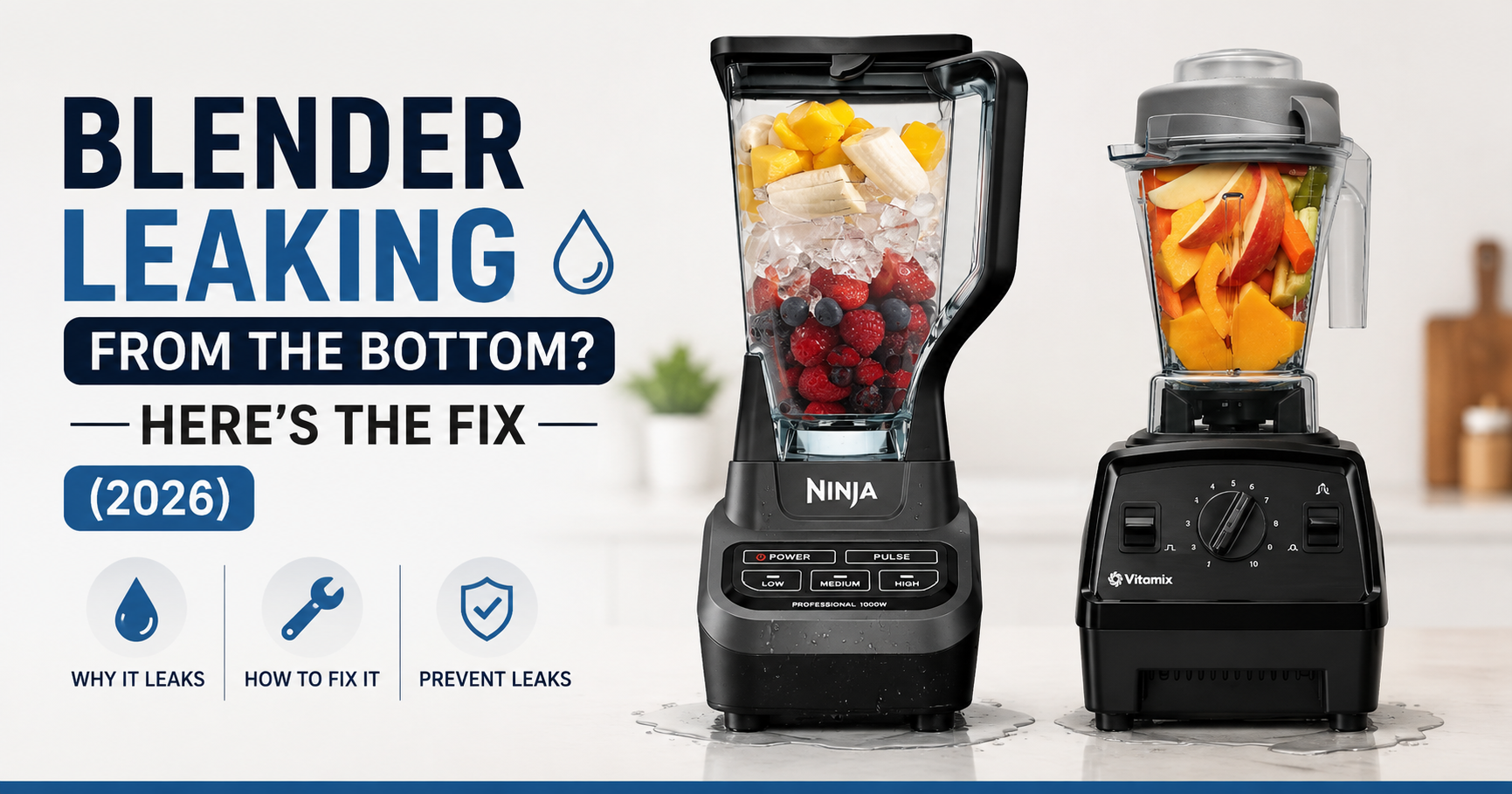
| Vitamix E310 Explorian | A durable, leak-resistant upgrade |
| Ninja Professional Blender BL610 | A budget-friendly, leak-resistant upgrade |
Product Reviews
Universal Blender Base Gasket Replacement Kit
Overview: A multi-size rubber gasket kit designed to fit most standard blender blade assemblies, giving you a quick fix without buying a new blender.
Pros:
- Inexpensive fix for the most common cause of leaks
- Fits a range of blender brands and models
- Simple to install with no tools required
Cons:
- Sizing can vary between blender brands, so double-check fit before buying
- Won’t fix leaks caused by a cracked pitcher base
Best For: Anyone whose blender is leaking but otherwise working fine.
Verdict: If your gasket looks worn, cracked, or flattened, this is the first thing to try before assuming your blender needs replacing.
🛒 Shop on Amazon →Food-Grade Silicone Lubricant
Overview: A food-safe silicone lubricant that helps gaskets seat properly and stay flexible, reducing the chance of future leaks.
Pros:
- Extends the life of both new and existing gaskets
- Food-safe, so it’s fine for parts that touch food
- Small amount goes a long way
Cons:
- Won’t fix a gasket that’s already cracked or torn
- An extra step, not a standalone leak fix
Best For: Preventive maintenance after installing a new gasket, or for gaskets that are still usable but starting to feel stiff.
Verdict: A cheap add-on that pairs well with a gasket replacement and helps you avoid repeating this fix again next year.
🛒 Shop on Amazon →Vitamix E310 Explorian
Overview: A mid-range Vitamix built with a tightly-sealed, aircraft-grade container base and laser-cut stainless blades, designed to hold up to frequent, heavy-duty use.
Pros:
- Reinforced base assembly that’s less prone to leaks over time
- Powerful motor handles everything from smoothies to hot soups
- Backed by Vitamix’s reputation for durability
Cons:
- Higher upfront cost than entry-level blenders
- Bulkier footprint, so it needs more counter or storage space
Best For: Home cooks who blend often and want a long-term upgrade instead of another short-lived budget blender.
Verdict: If you’re done patching gaskets on an aging blender, this is a reliable step up that’s built to avoid the same leak issues.
🛒 Shop on Amazon →Ninja Professional Blender BL610
Overview: A budget-friendly blender with a solid, leak-resistant base and enough power for everyday blending tasks — a practical option for apartment kitchens and smaller budgets.
Pros:
- Noticeably more affordable than premium blenders
- Sturdy base assembly that seals well when maintained
- Compact enough for smaller kitchens
Cons:
- Not quite as heavy-duty as premium models for daily, high-volume use
- Fewer speed/texture settings than higher-end blenders
Best For: Budget-conscious households or apartment owners who want a reliable, leak-resistant blender without a big price jump.
Verdict: A solid, affordable pick if your old blender’s base is cracked beyond repair and you don’t need Vitamix-level power.
🛒 Shop on Amazon →| Product | Type | Best For | Base Durability |
|---|---|---|---|
| Universal Gasket Replacement Kit | Repair part | Fixing an existing blender | N/A (replacement part) |
| Food-Grade Silicone Lubricant | Maintenance product | Preventing future leaks | N/A (maintenance product) |
| Vitamix E310 Explorian | Full blender | Frequent, heavy-duty use | High |
| Ninja Professional Blender BL610 | Full blender | Budget-friendly everyday use | Moderate-High |
Buying Guide: What to Look for If You’re Replacing Your Blender
If repairs aren’t cutting it anymore, keep these in mind when shopping for a replacement:
- Base and seal construction — look for reviews that specifically mention a durable, leak-resistant base rather than just motor power.
- Motor wattage — higher wattage handles ice and frozen fruit more smoothly, but more power isn’t always necessary for basic smoothies.
- Pitcher material — glass and Tritan plastic tend to resist warping better than standard plastic over time.
- Ease of cleaning and disassembly — a blender that’s easy to take apart makes gasket checks and cleaning far less of a chore.
- Warranty length — a longer warranty is often a good signal of how confident the brand is in the base and seal durability.
FAQs
Why is my blender suddenly leaking when it never did before? This usually points to gasket wear from age and repeated use, not a sudden defect. Rubber gaskets naturally harden and lose their seal over time, even with normal use.
Can I use a blender with a leaking base if I just don’t fill it as much? You can in the short term, but it’s a workaround, not a fix. The leak will likely return or worsen, so it’s worth replacing the gasket when you get the chance.
Is it safe to keep using a blender that leaks? Yes, as long as liquid isn’t reaching the motor base or electrical components. Keep the outer base dry and wipe up leaks promptly to avoid any electrical risk.
How often should I replace my blender’s gasket? There’s no fixed schedule, but if you blend daily, checking the gasket every 6–12 months is a reasonable habit, replacing it as soon as you notice cracking or leaks.
Will tightening the blade assembly harder stop the leak? Sometimes, but over-tightening can crack the housing instead. If snugging it up doesn’t help, the gasket is the more likely culprit.
Is it cheaper to fix my blender or buy a new one? A gasket kit costs a fraction of a new blender, so it’s almost always worth trying the fix first — unless the base itself is cracked or warped.
Final Verdict
Most bottom leaks come down to a simple gasket problem, so start with the Universal Blender Base Gasket Replacement Kit and a bit of Food-Grade Silicone Lubricant before assuming the worst. If your blender’s base is cracked or the leak persists after a gasket swap, it’s time to upgrade — the Vitamix E310 Explorian is our pick for long-term durability, while the Ninja Professional Blender BL610 is a smart, budget-friendly alternative that’s still built to avoid the same leak issues.
For more full blender recommendations across every budget, check out our Best Blenders guide.